Talking openly about your health doesn’t always come easily, and this can be especially true for men when the topic feels personal or uncomfortable. But avoiding those discussions can lead to delayed care that could make a real difference. Brittany Clark, MSN, APRN, CNP, a urology nurse practitioner with Kettering Health, sees this reality firsthand.
In recognition of Men’s Health Awareness Month, we sat down with Brittany to learn about the value of preventive care, common misconceptions around urological health, and how nurse practitioners are helping men feel more at ease seeking care.
A Calling to Nursing and Misconceptions about Urology
Brittany knew she wanted to be a nurse from the time she was three, and by high school, she was already on the path to becoming an advanced practice nurse. Shortly after earning her CNP degree, she found herself drawn to Urology—a specialty she says offers a lot of different opportunities to make a difference in people’s lives.
“People think of urology and just think of me as treating peeing problems, but we see so much more, including low testosterone, infertility, kidney stones, and several different types of cancer.”
Brittany also noted that many people assume urology is reserved for older individuals, when in reality, she treats patients of all ages every day.
Why Men Delay Care
In her field, Brittany has treated many male patients who have been reluctant to share their health concerns.
“I think there’s just a stigma around it, that they think it shows weakness, which it does not at all,” she said. “I think it actually empowers them to take care of their health.”
One shift she’s seen make a difference is the rise of telehealth. Having the option to talk from home can help people, especially men, feel more at ease. And when that hesitation starts to ease, it can have a real impact.
The Importance of Taking Charge of Your Health
Taking care of your urinary health starts with making preventive care a priority.
“The most important screening I see from a urology standpoint is prostate cancer screening,” she said.
For men without a family history of prostate cancer, Brittany recommends discussing annual PSA (prostate-specific antigen) blood testing beginning around age 50. Men with a family history may need to begin screening earlier based on their APRN’s recommendations.
She also encourages men not to wait until symptoms become severe before scheduling an appointment or dismiss symptoms as simply a part of getting older.
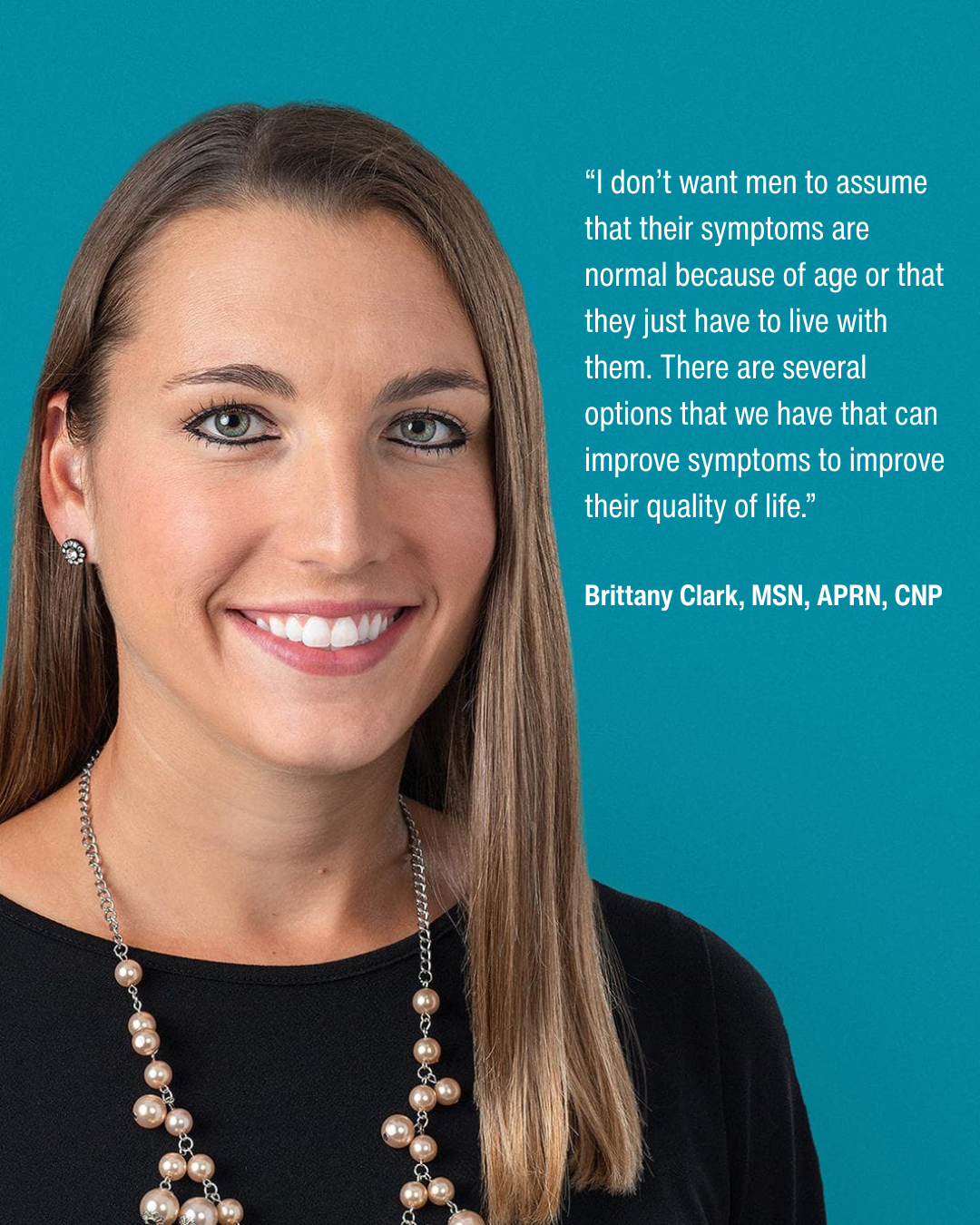
“I don’t want men to assume that their symptoms are normal because of age or that they just have to live with them,” Brittany said. “There are several options that we have that can improve symptoms to improve their quality of life.”
Common Symptoms Men Shouldn’t Ignore
As a urology APRN provider, Brittany regularly treats a wide range of conditions affecting men’s health, including:
- Enlarged prostate (benign prostatic hyperplasia)
- Kidney stones
- Erectile dysfunction
- Prostate cancer
- Bladder cancer
While some symptoms may seem minor, Brittany emphasizes that certain things, like severe acute onset testicular pain, should never be ignored.
“This can be a sign of testicular torsion, where the veins and arteries get twisted, which is a surgical emergency.”
She also advises patients to seek medical attention if they notice blood in their urine, as it often warrants further evaluation.
Lifestyle Habits That Support Men’s Health
Aside from regular screenings, Brittany notes that several daily habits can play a critical role on long-term health and wellness. Those include:
- Regular Physical Activity: Research has shown that men who maintain higher levels of physical activity often experience fewer urinary symptoms and better overall health outcomes.
- A Healthy Diet: Brittany points to the Mediterranean diet as one approach associated with improved urinary health and overall wellness.
- Staying Hydrated: Adequate fluid intake can help reduce the risk of kidney stones, urinary tract infections, and other urinary symptoms.
- Maintaining a Healthy Weight: Obesity is a major risk factor. Maintaining a healthy weight can help improve testosterone levels, libido, and erectile dysfunction.
A Final Message for Men
As Men’s Health Awareness Month highlights prevention and wellness, Brittany hopes more men will feel comfortable starting conversations about their health.
“Don’t assume that symptoms are something you just have to live with,” she said. “There are people who want to help, and there are often solutions available.”
By prioritizing preventive screenings, maintaining healthy lifestyle habits, and speaking openly about health concerns, men can take meaningful steps toward improving both their quality of life and long-term well-being.
Supporting the NP Profession Through OAAPN
After attending a single OAAPN meeting as a student in 2012, Brittany quickly became a member, leading her to an invaluable professional network through OAAPN.
“The networking helped me find clinical rotations and preceptors, and many of those individuals are still mentors today,” she said.
Today, Brittany remains actively engaged with OAAPN through continuing education opportunities and advocacy efforts, including discussions with legislators regarding practice regulations for nurse practitioners in Ohio.
“Those experiences have made me feel empowered and excited about the future of the profession,” she said.
Discover APRNs Making a Difference
The Ohio Association of Advanced Practice Nurses (OAAPN) is proud to spotlight providers who are making a meaningful difference in the lives of patients and families across our state.
- Breaking the Stigma: A Conversation on Mental Health with Deana Batross, DNP, APRN, FNP-BC, PMHNP-BC
- Amazing APRN Spotlight: Mandi Cafasso DNP, APRN, CPNP
- Colorectal Health Awareness: How Stacy McCoy, APRN-CNP, Empowers Patients Through Prevention
- Cervical Cancer Prevention Starts with Access: How Nurse Practitioners Like Heather Hissom Are Making It Possible
- How Natalie Holden, FNP, CDCES, is Changing Diabetes Care in Rural Appalachia