World Brain Day—observed on July 22—is a timely reminder that brain health is something we can protect and strengthen through everyday habits, early attention to symptoms, and continued progress in neurological care. While brain health can feel like a complex topic, the message from Sara Hunter, DNP, APRN-CNP, is refreshingly practical: small, consistent choices matter, and listening to your body matters even more.
As a nurse practitioner in outpatient neurology, Sara sees firsthand how brain health shapes daily life. Her work includes caring for patients with headaches, memory concerns, concussions, and other neurologic conditions, and she emphasizes the value of taking time to truly hear what patients are experiencing. In a fast-paced health care environment, that kind of attention can make a meaningful difference.
Sara’s Path to Neurology
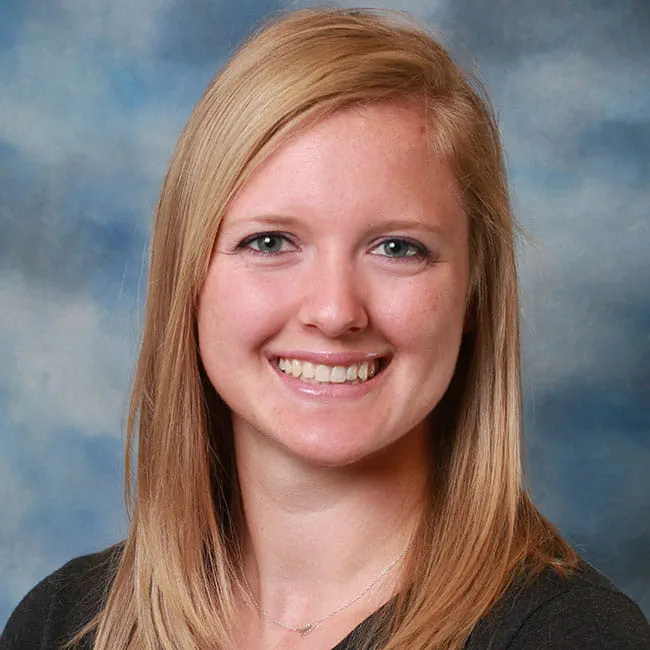
Sara’s career in nursing began early, when she knew as a young child that she wanted to help people by becoming a nurse. She went on to earn her Bachelor of Science in Nursing from the University of Mount St. Joseph in Cincinnati, along with a Master of Science in Nursing from the University of Toledo and a Doctorate in Nursing Practice from The Ohio State University College of Nursing.
From there, she explored several areas of care through clinical rotations before moving into a neuro ICU residency program at Toledo Hospital. Although neurology was not originally the path she expected to take, she quickly found herself drawn to the field.
What changed her mind was seeing how powerfully the brain affects the whole person. Even a small injury or disorder in one part of the brain can have wide-reaching effects, and that complexity made the specialty both challenging and compelling. From neuro ICU, she later moved into outpatient neurology as a nurse practitioner, where she has now practiced for 11 years.
What A Normal Day Looks Like
In her current role, Sara sees patients with headaches, memory concerns, concussions, and a range of generalized neurologic disorders. She also practices with a high degree of independence while still collaborating closely with the physician in her practice. She described that relationship as one built on trust and strong training, with both providers managing their own patient loads and consulting each other when needed. That structure allows her to focus on thoughtful, patient-centered care rather than rushed visits.
“I try to be very present with my patients during their appointment,” she said. That approach matters to patients, many of whom simply want to be heard. As Sara put it, “I can’t tell you how many times I’ve had a patient thank me for actually listening to them.”
Everyday Habits That Support Brain Health
When it comes to brain health, Sara’s advice is practical: “Some of the simplest things can make the biggest impact,” she said, pointing to quality sleep, regular exercise, hydration, and nutritious food as everyday ways to support the brain. She also encouraged people to stay mentally active by learning new skills, trying a language, or picking up an instrument.
For World Brain Day, she recommends doing things that help strengthen the brain and keep it sharp. Small changes may not feel dramatic in the moment, but over time they can have a meaningful effect on long-term brain health.
Sara also emphasized the importance of early attention to symptoms. Her message to patients and families is straightforward: “You are the expert in you”. If something does not feel normal, she encourages people not to brush it off.
That mindset can help lead to earlier evaluation, a clearer baseline, and better chances of catching a problem sooner.
How Neurology is Changing
Sara has seen major progress in neurology over the course of her career. Since she began outpatient neurology in 2015, she has watched the field expand with more medications, new mechanisms of action, and more targeted therapies for conditions like multiple sclerosis, epilepsy, Parkinson’s disease, and migraine. She described the pace of change as exciting and noted that newer treatments often bring fewer side effects because they are more precisely designed.
Celebrating World Brain Day
World Brain Day is a chance to pause and remember that brain health is shaped by what we do every day, how quickly we respond when something feels wrong, and how much progress is still being made in neurological care. Sara’s perspective is a strong reminder that even small steps can matter and that listening to yourself is an important part of staying healthy.
The Impact of Long-Term OAAPN Membership
Sara has been an OAAPN member for nearly 13 years and has served as Toledo chapter leader since 2019. For her, membership has meant more than professional affiliation—it has created a network of peers she can learn from, call on, and grow with.
“The networking opportunities are amazing,” she said. She also called OAAPN a strong place for advocacy, CME, and camaraderie among advanced practice nurses. Because she does not have other APPs in her practice, that connection with peers has been especially valuable.