When nurses start thinking about what might come next in their careers, the choices can feel overwhelming. Do you stay at the bedside? Move into leadership? Go back to school to become a nurse practitioner? Focus on education, quality or informatics?
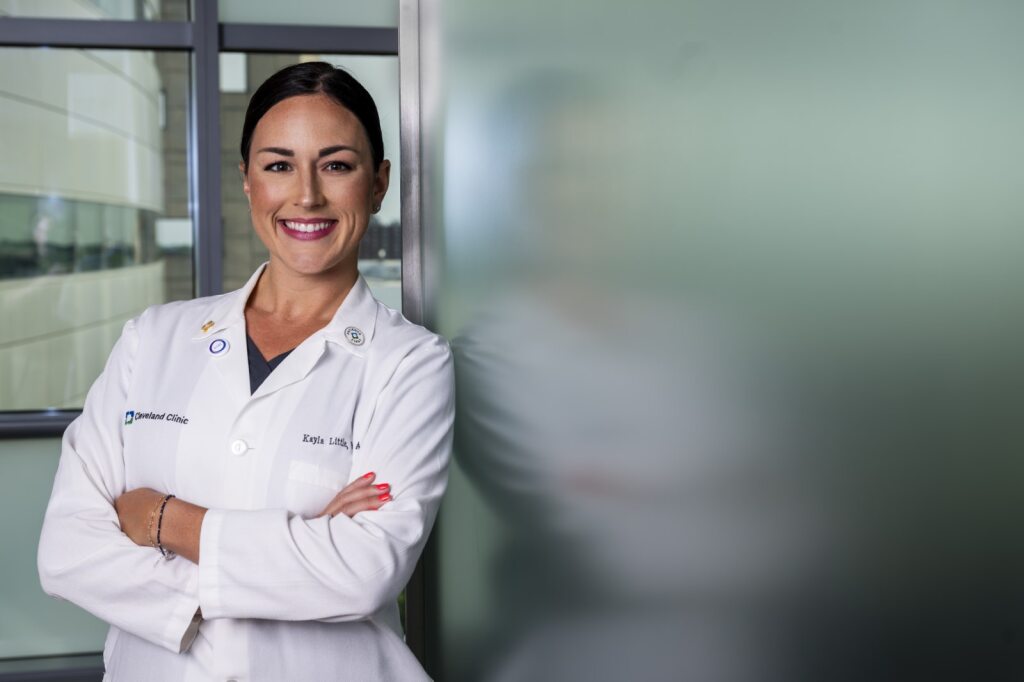
For Kayla Little, MSN, APRN, AGCNS-BC, PCCN, FCNS, the answer didn’t become clear overnight. She knew she loved nursing. But she also knew she wanted to have a broader impact—supporting other nurses, improving the way care is delivered and helping solve problems that affect more than one patient at a time.
That’s what led her to become a Clinical Nurse Specialist, or CNS.
For Clinical Nurse Specialist Week, OAAPN is spotlighting Kayla’s journey and sharing a closer look at a role that is often misunderstood, but deeply important to patients, nurses and healthcare organizations.
The Journey to Becoming a Clinical Nurse Specialist
Kayla’s nursing career began at at Cleveland Clinic’s Main Campus in Cleveland, Ohio, where she first worked as a nursing assistant. After earning her BSN from Walsh University, she joined a cardiac step-down unit as a registered nurse.
Early on, she found herself drawn to opportunities beyond her day-to-day assignment. She became involved in shared governance, worked as a charge nurse, and served as a primary preceptor for new nurses.
Those experiences mattered because they showed her that she enjoyed helping nurses build confidence. She liked being part of projects that could make practice better. And she could see how changes made by nurses could affect patient outcomes in a very real way.
“I really enjoyed that mentorship and then also doing projects and seeing how it impacted nursing practice and patient outcomes,” Kayla shared.
After about two years at the bedside, Kayla became an assistant nurse manager and decided to pursue her master’s degree. She initially enrolled in a women’s health nurse practitioner program at Kent State University, knowing she wanted to expand her influence but not yet knowing exactly where her path would lead.
As she learned more about the nurse practitioner role, however, she realized she was looking for a broader scope—one that would allow her to contribute to patient care while also leading projects, shaping policies, supporting education and advancing evidence-based practice.
And as it just so happened, a friend introduced her to a CNS role. It was when Kayla read Kent State’s description of the Clinical Nurse Specialist program, things started to finally click
“It was exactly what I was looking for,” she explained. The role included mentorship, leadership, projects and quality improvement—all with the goal of advancing nursing practice and improving patient outcomes.
Kayla changed paths, completed Kent State’s CNS program and graduated with an MSN in 2019. She began working as a Clinical Nurse Specialist right away.
A Deeper Look at the CNS Role
What does a CNS actually do? This is one of the hardest questions to answer with a neat job description, because no two CNS roles look exactly alike.
Today, Kayla supports cardiovascular medicine, heart and lung transplant, and vascular surgery step-down nursing units within Cleveland Clinic’s Heart, Vascular & Thoracic Institute. Her work is not about knowing every detail of every patient on every unit. Instead, she serves as a resource when nurses run into something complex, unfamiliar, or outside the usual routine.
That might mean helping a nurse think through a complicated plan of care. It could mean identifying whether another team—such as pain management or bioethics—should be involved. Sometimes, it means walking a nurse through a procedure they have not performed before or helping them find the policy that guides their next step.
In other words, the CNS is often the person nurses call when they are asking, “What are we missing?” or “What is the best next step here?”
That outside perspective can make a meaningful difference. It helps nurses feel supported in difficult moments while keeping patient care at the center of the conversation.
Kayla describes the role as a combination of several nursing specialties. Depending on the need, she may be educating staff, collaborating with informatics teams on charting or clinical-system improvements, supporting quality initiatives or working directly with nurses to consider interventions that could improve patient outcomes.
For future nurses, that range is worth paying attention to. If you enjoy clinical practice but also want to teach, lead change, build systems and work across teams, CNS practice may offer the variety you are looking for.
Making Lasting Change
One of the most rewarding parts of Kayla’s work has been seeing what can happen when people from different disciplines come together around a shared problem.
Most recently, she served as the nursing lead for an interprofessional project focused on improving pressure-injury performance at Cleveland Clinic. The organization was not meeting its goal, and leaders asked the team to find a better path forward.
Kayla did not come into the project as a wound-care specialist. But that didn’t prevent her from leading it. She learned from the wound-care team, strengthened relationships with physician and quality colleagues and helped bring together nurses, informatics professionals, analysts and other stakeholders.
The team met regularly, worked through difficult conversations, and developed a new approach to pressure-injury classification and management. Over the course of a year, they achieved a 36% reduction in HAPIs and improved Patient Safety Indicator 03 (PSI 03) performance by 59%—translating to an estimated $8.4 million in cost savings.
The takeaway is not that a CNS has to be an expert in every subject. It’s that CNSs know how to ask questions, find the right people, use evidence and help teams move from “This is a problem” to “Here is what we can do about it.”
That kind of work isn’t always flashy, either. It can involve meetings, data, policy review, education, and most importantly, a lot of follow-through. But it can improve care for a large number of patients and make daily practice safer and clearer for nurses.
What Kayla Wants Future CNSs to Know
If you’re curious about becoming a Clinical Nurse Specialist, Kayla’s first recommendation is simple: spend time with CNSs who are doing the job now.
“Talk with current clinical nurse specialists [and] spend some time to shadow with them,” she said.
Shadowing can help you see the many ways CNSs practice. One CNS may support a few specialized nursing units, while another works hospital-wide. Some focus more heavily on direct patient care, while others work in leadership, education, quality improvement, or informatics. The role is shaped by the needs of the organization, the patient population and the CNS’s area of expertise.
That flexibility can be exciting, but it also means you should ask good questions before choosing a graduate program or accepting a position
What problems does this CNS help solve most often?
How much time is spent with bedside nurses, patients, and interdisciplinary teams?
What does the CNS’s involvement look like in education, policy or quality improvement?
How does the organization define and support the CNS role?
What opportunities are available to lead projects or influence practice?
Kayla also encourages nurses to stay engaged with professional organizations. As the 2026 president-elect of the National Association of Clinical Nurse Specialists (NACNS) and President of the Ohio Clinical Nurse Specialist organization (OHCNS), she has seen firsthand how professional involvement can shape both individual careers and the nursing profession as a whole. Her previous service on OAAPN’s Government Relations Committee also gave her a closer look at how policy moves through the legislative process—and how directly those decisions can affect nursing practice.
For advanced practice nurses in Ohio, OAAPN plays an important role by advocating not only for nurse practitioners, but for the broader APRN community as well.
A Role with Room to Grow
The Clinical Nurse Specialist role is not disappearing. It is evolving, and it can look different from one organization to the next.
But for nurses who want a career that combines clinical expertise with mentorship, education, systems thinking, collaboration and quality improvement, the CNS path can be a strong fit.
Kayla’s career is a good example of what becomes possible when a nurse follows the work that feels meaningful. She started by caring for patients at the bedside, and over time, she discovered that she also wanted to help other nurses succeed, improve how care is delivered, and bring people together to solve bigger problems.
That is the kind of impact Clinical Nurse Specialists make every day.
About Kayla Little, MSN, APRN, AGCNS-BC, PCCN, FCNS
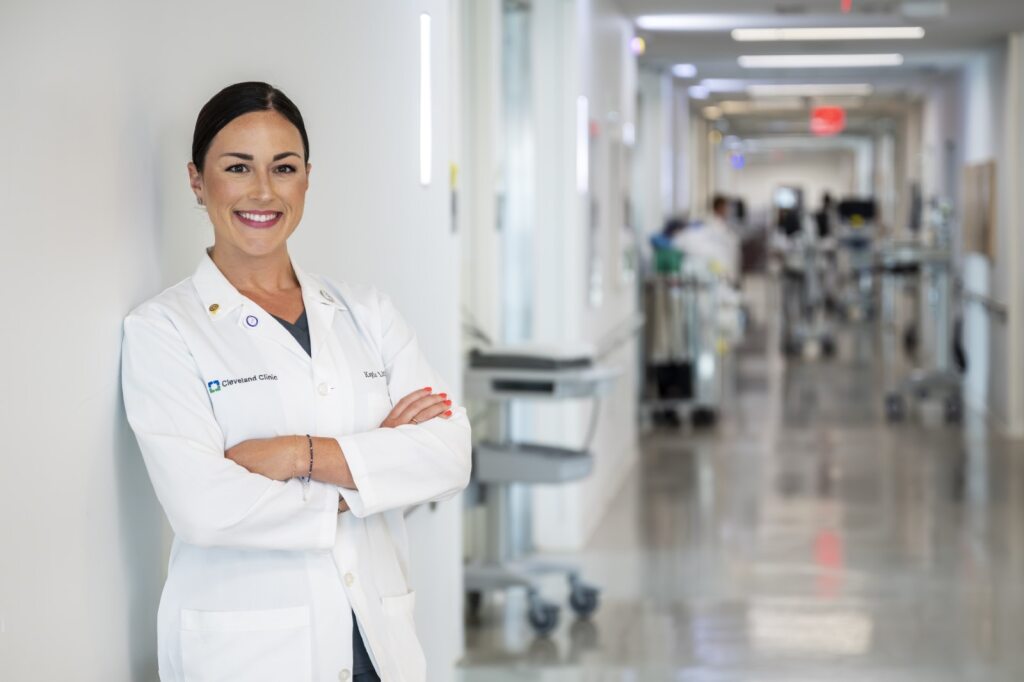
Kayla Little MSN, APRN, AGCNS-BC, PCCN, FCNS is a Clinical Nurse Specialist who supports the cardiovascular medicine, heart and lung transplant, and vascular surgery stepdown nursing units within the Heart, Vascular, and Thoracic Institute at the Cleveland Clinic Main Campus in Cleveland, Ohio. She earned a BSN from Walsh University and an MSN from Kent State University. Kayla has been published in a variety of nursing journals, the AACN Procedure Manual for Progressive and Critical Care (8th ed., 2023) and the Anatomy of Writing for Publication, (5th ed.). Kayla is a column editor for the Clinical Nurse Specialist Journal. She was the recipient of the Cleveland Clinic Professional Practice Model Award for Quality and Safety in 2025, the Rising Star Clinical Nurse Specialist of the Year award in 2022 from the National Association of Clinical Nurse Specialists (NACNS), and the Barbara Donaho Distinguished Leadership in Learning Award from Kent State University in 2023. Kayla is the 2026 NACNS president-elect and a Fellow of the Clinical Nurse Specialist Institute. She is the President for the Ohio Clinical Nurse Specialist (OHCNS).